
Style Six
The Loyalist
Sixes live in a world filled with danger. They either run from it or toward it. Many people who perform great feats of bravery are trying desperately to ward off an inner fear. We call those Sixes who go toward danger "Counterphobic" Sixes. Counterphobic Sixes look quite different from Phobic Sixes who run away from danger.
Healthy Sixes are the glue of an office, family or community. They are charming and diplomatic, always concerned about the common good. They are often funny and imaginative. They are loyal, hard-working, and usually protective of a tradition. They make and keep lots of friends. They love win/win situations. 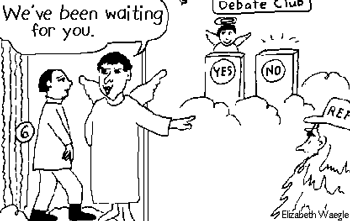 Sixes make our bureaucracy run smoothly. They have the patience and charm and are willing to do the drudgery work.
More unhealthy Sixes become excessively devoted to a tradition or community (church, party, company) and become blind followers. They give away their power to the authorities, all the time not trusting the authorities. They become suspicious and begin to worry a lot. This can prevent them from taking appropriate action in their life. They control others by doubts and second-guessing each decision.
Sixes you may know: Woody Allen, George H.W. Bush, Candace Bergen, Julia Roberts, Mel Gibson, Bruce Willis, Bob Newhart, Richard Nixon, Adolph Hitler, Colin Powell, Robert Redford, Bruce Springsteen.