
Style Two

Style Two is emphatically about people. Their primary concern is giving and getting love, their life's focus is on the needs of other people, often ignoring their own.

When they are healthy, they are altruistic, giving without counting the cost. They have an advanced ability to know what the people they love need and spend a great deal of effort and energy to meet those needs. The model of Christian sainthood is implicitly a healthy Two. They do whatever they do in the name of love. They are the helpers of the world and understand that all people are brothers and sisters.
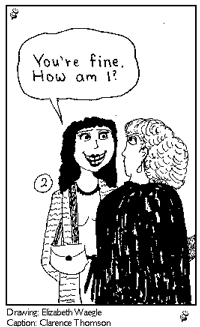
As they get less healthy, they do less noble things still in the name of love. They give, but the gift is an investment their loved ones better return - or else. They become possessive and co-dependent. Instead of being a behind-the-scenes helper, they become pushy and demanding, ultimately they can become stalkers. Stage mothers and people who flock around powerful people to live vicariously through them are often unhealthy Twos.

Twos you may know: Nancy Reagan, Monica Lewinski, Leona Helmsly, Barbara Bush, Alan Alda, John Travolta, Madonna, Mr. Rogers.

Recognizing Style Two

  1. They may feel unappreciated, aching for approval and not receiving it.
  2. They may lack words for the intense emotions they feel.
  3. They may lack an inner self-definition.
  4. They may be unable to distinguish their feelings from the group's feelings.
  5. They may have difficulty making their needs known.
  6. They may not see why they should be ashamed of manipulation.
  7. They may not be able to distinguish thoughts from feelings.
  8. They may experience betrayal of self in order to affiliate with others.
  9. They may neglect their health.
  10. They may not pay attention enough to recognize inner confusion.

How You Can Help

  1. Encourage solitude. It relives the pressure to affiliate.
  2. Among all the activities, help them find the "constant self."
  3. Remember, "What you don't get up front, you get out back."
  4. Have them answer, "How do you take control?"
  5. Help them identify their negative feelings.
  6. Help them face and work through the anger at not being appreciated, not getting approval, not receiving strong enough emotional response and more subtly, not being free. Their anger will show up when they realize they are angry at having given themselves away. Sex will often show up here.
  7. Help them face their fatigue at conforming to others' needs, whims, and expectations.
  8. Help them face their dependence. Contrast it with freedom.
  9. Ask who owns their friends' feelings.
  10. Watch out. They may do whatever will get your approval.